|
|
|
0 members (),
2,782
guests, and
25
robots. |
|
Key:
Admin,
Global Mod,
Mod
|
|
S |
M |
T |
W |
T |
F |
S |
|
|
|
1
|
2
|
3
|
4
|
5
|
|
6
|
7
|
8
|
9
|
10
|
11
|
12
|
|
13
|
14
|
15
|
16
|
17
|
18
|
19
|
|
20
|
21
|
22
|
23
|
24
|
25
|
26
|
|
27
|
28
|
29
|
30
|
|
|
|
|
There are no members with birthdays on this day. |
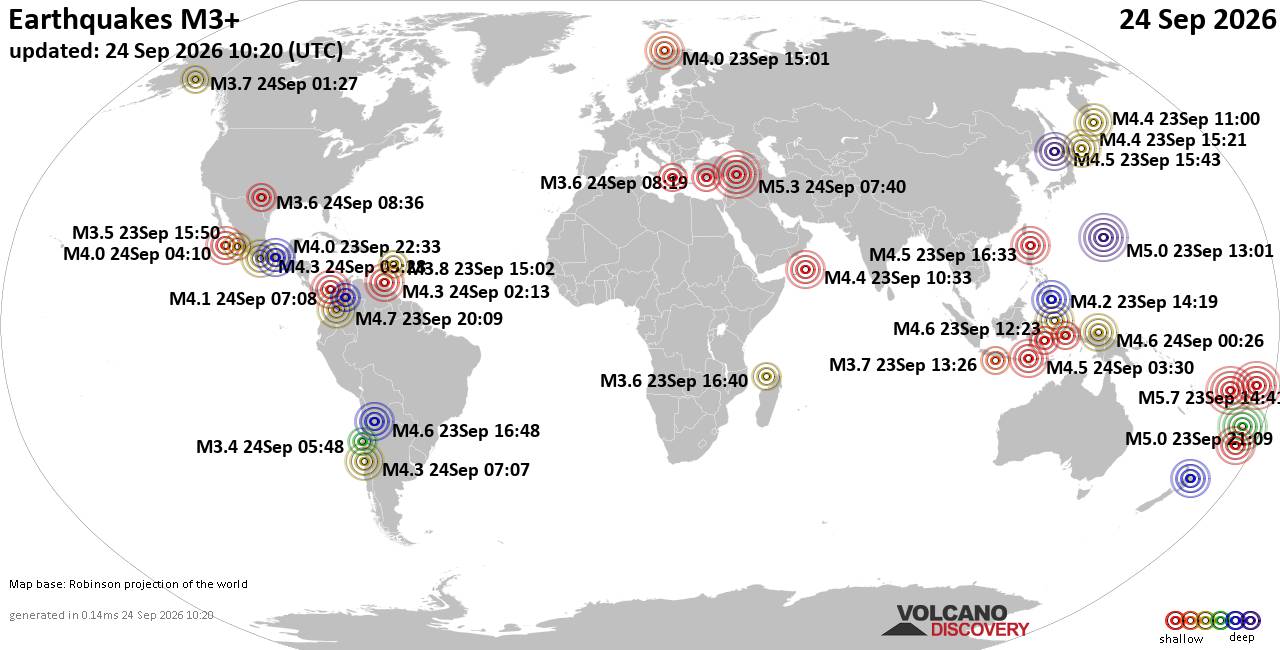
World Earthquake Report for Thursday, 24 September 2026
• Moderate mag. 4.3 earthquake - Madagascar: Mozambique Channel on Thursday, ...
• Small magnitude 3.9 earthquake hits near Hastings, Hastings District, Hawke...
• Volcano earthquake report for Thursday, 24 September 2026
• Light mag. 3.9 earthquake - South Pacific Ocean, 10.2 km south of Hastings,...
• Moderate magnitude 4.1 quake hits 31 miles southeast of Midland, Texas, Uni...
|

#854333
Wed 02 Sep 2026 12:00:PM
|
Joined: Dec 2002
Posts: 95,828
Launch Director
|
|
Launch Director
Joined: Dec 2002
Posts: 95,828 |
Adversarial Collaboration in Philosophy (guest post)“Philosophical work would be better with adversaries collaborating to keep each other honest.” Why is that? What would it look like? In the following guest post, members of the Mind and Morality Lab at Boston University—Victor Kumar (Boston University), Derek Anderson (Boston University), Emilia Lacy (Boston University), Josh May (University of Alabama, Birmingham), Rachel McKinney (Suffolk University), Tino Themelis (Boston University), and Velana Valdez (Boston University)—explain adversarial collaboration and offer answers to those questions. Adversarial Collaboration in Philosophy by Victor Kumar, Derek Anderson, Emilia Lacy, Josh May, Rachel McKinney, Tino Themelis, and Velana Valdez Scientists, being only human, often collect and analyze data in ways that unintentionally skew the results in their favor. Thankfully, this occupational disease has a known cure. In adversarial collaboration, researchers with conflicting hypotheses lay down their arms, joining forces to work out a study design and statistical criteria—not eliminating confirmation biases, just neutralizing them in the aggregate. Then they run the study and accept the results, come what may. As philosophers, we applaud this development. It’s about time, really. We’ve been practicing adversarial collaboration ourselves since circa 387 BC, haven’t we? Not exactly. Adversarial collaboration isn’t just the Socratic method. It’s a commitment to abide by prespecified evidence. And how could we agree in advance about what would settle philosophical disputes? We don’t run experiments, nor do we have any data to crunch. (Mostly.) You can’t precommit to a thought experiment: by the time you pose one, the results are already in. The idea seems like a non-starter, but in fact, adversarial collaboration can be adapted for philosophy. The first step is to isolate its true functions in science. The Method The late Nobel laureate Daniel Kahneman argued that scientific disagreement was too combative. Scientists rarely change their minds. So in the late 1990s, he thought: if you can’t beat ’em, join ’em. (And he did. Many times.) Kahneman’s final adversarial collaboration was on income and happiness. Previously, he’d found that happiness rises with income but only until about $75,000. Another researcher, Matthew Killingsworth, found no plateau at all. Instead of trading criticisms, they decided to analyze the data together. What they found is that the plateau is real but only for the least.. The post Adversarial Collaboration in Philosophy (guest post) first appeared on Daily Nous. https://dailynous.com/2026/09/02/adversarial-collaboration-in-philosophy-guest-post/
|
|



CMS The Best Conveyancing solicitors conveyancing quotes throughout the UK
For any webhosting enquiries please email webmaster@aus-city.com
|
|
Forums60
Topics840,728
Posts875,523
Members2,960
| |
Most Online102,106
Jul 10th, 2026
|
|
|
|
|

|